
Mandarin has four main tones and a light neutral tone. A tone is the pitch pattern of a syllable: high and flat, rising, dipping, or falling. Changing the tone can change the meaning, so learning tones early is the key to being understood. Our Conversational Mandarin Chinese, Level 1 class teaches tones from day one, with live feedback every Saturday.
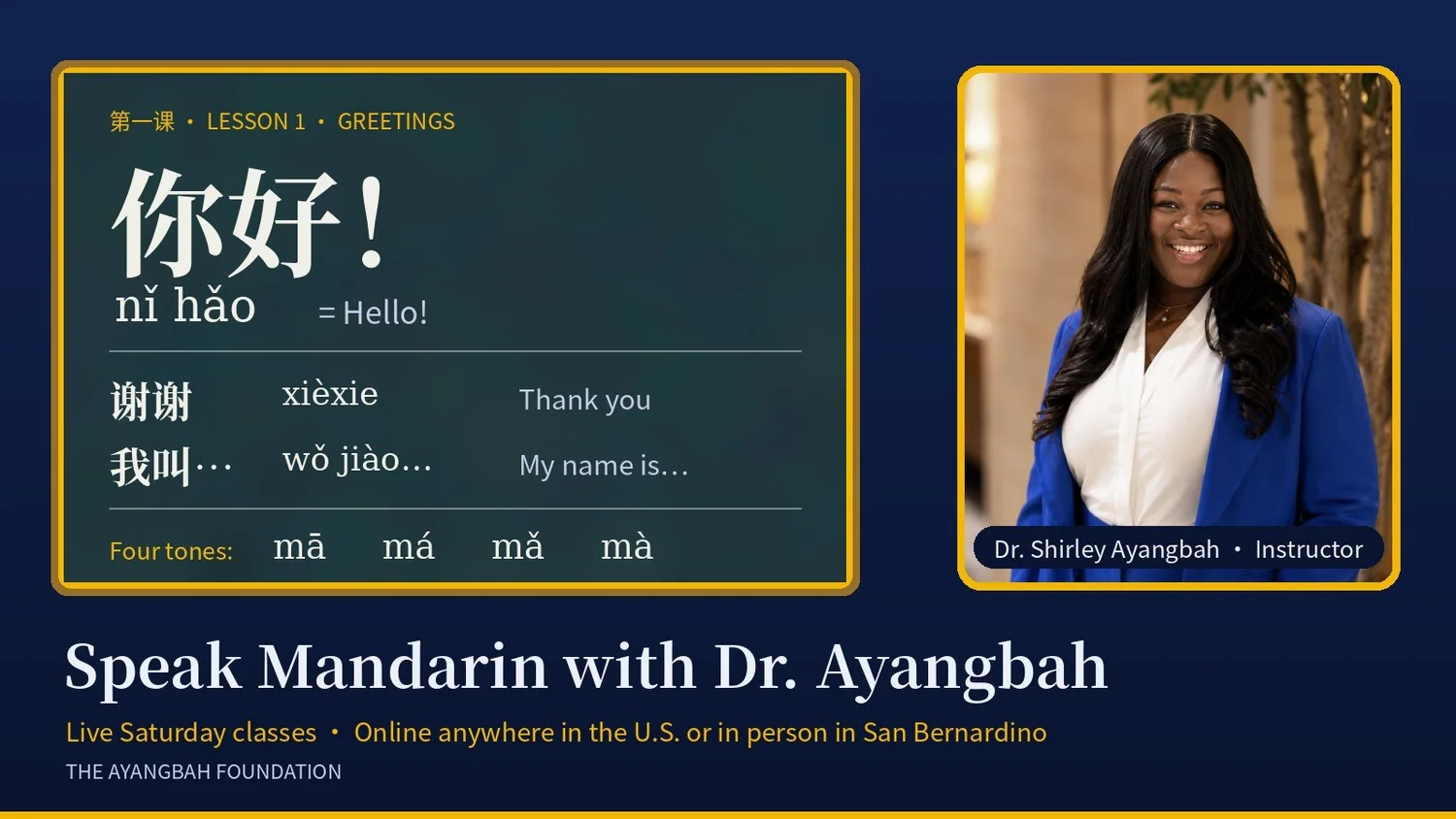
The four tones, simply
Pinyin shows each tone with a mark over a vowel. Here is the classic example using the syllable "ma":
- First tone (mā), high and level. Hold it steady, like singing one note. Mā means "mom."
- Second tone (má), rising. Goes up, like asking "huh?" in English. Má can mean "hemp."
- Third tone (mǎ), low and dipping. Drops low, then may rise a little. Mǎ means "horse."
- Fourth tone (mà), sharp falling. Starts high and drops fast, like a firm "No!" Mà means "to scold."
There is also the neutral tone, which is short and light with no mark. You hear it in the second syllable of words like māma (mom) and xièxie (thank you).
Why tones feel strange to English speakers
English uses pitch for feeling. A rising voice can turn a statement into a question. In Mandarin, pitch is part of the word itself. That is a new habit for your brain, and it takes practice, not talent. Many adults learn tones well with clear instruction and regular feedback.
Two tone changes worth knowing early
- Two third tones in a row: the first one changes to a rising second tone. That is why nǐ hǎo sounds like "ní hǎo."
- Bù (not) before a fourth tone: it becomes bú, as in bú kèqi (you're welcome) and bú shì (is not).
Do not panic about rules. Learn them inside common phrases and they become automatic.
Simple ways to practice tones
- Use your hand. Draw the tone shape in the air as you say it: flat, up, dip, down. It sounds silly and it helps.
- Exaggerate at first. Make the tones bigger than feels natural. You can relax them later.
- Drill pairs. Practice two-syllable words, since that is how tones appear in real speech.
- Record and compare. Record yourself, then compare it to your teacher or textbook audio.
- Practice phrases, not just syllables. Say "nǐ hǎo," "xièxie," and "duōshao qián?" until the tones feel natural.
- Get corrected. You often cannot hear your own mistakes. A live instructor can.
How the class teaches tones
Level 1 starts with pinyin and the four tones, then puts them to work right away in greetings, numbers, time, shopping and directions. Every class includes role-play, so you practice tones in real conversation, not in isolation. Explanations are given in English, so you always understand what to fix and why.
Class details
- Class: Conversational Mandarin Chinese, Level 1, taught in English by The Ayangbah Foundation
- Dates: Saturdays, October 17 to December 12, 2026 (no class November 28). 8 weeks, 16 hours total.
- Live online: 9:00-11:00 AM Pacific (12:00-2:00 PM Eastern), from anywhere in the U.S.
- In person: 11:30 AM-1:30 PM at 255 N. D Street, Suite #200-XXVII, San Bernardino, CA 92401
- Tuition: $297
- What you get: speaking-first lessons covering pinyin, the four tones, greetings, numbers, time, shopping and directions, with role-play in every class. The textbook is Developing Chinese: Elementary Comprehensive Course 1 (2nd Edition), which you buy separately.
Required textbook

Speak Mandarin with Dr. Ayangbah uses Developing Chinese: Elementary Comprehensive Course 1 (2nd Edition, with MP3 audio), 发展汉语 初级综合 (I), by Rong Jihua (Beijing Language and Culture University Press). Get the 2nd Edition of Elementary Comprehensive Course 1 and have it by the first class. Buy it on Amazon.
How to enroll
- Apply online. It takes about 2 minutes.
- Pay $297 through the Mandarin class pay link or on our tuition page.
- We confirm your seat within 2 business days.
Want to ask questions first? Join our free info session and orientation, online every Monday from 5:00 to 5:45 PM Pacific. Register on the enroll page to get the link.
FAQ
How many tones does Mandarin have?
Four main tones plus a light neutral tone. Pinyin marks the four main tones with symbols over the vowels.
Can I be understood if my tones are not perfect?
Context helps a lot, and nobody is perfect at first. Still, clearer tones make you much easier to understand, which is why we practice them every class.
Do I need a musical background to learn tones?
No. Tones are a skill you build with listening, repetition and feedback, not a musical gift.
Questions? Call or text (909) 454-7076, or email info@ayangbahfoundation.org.