
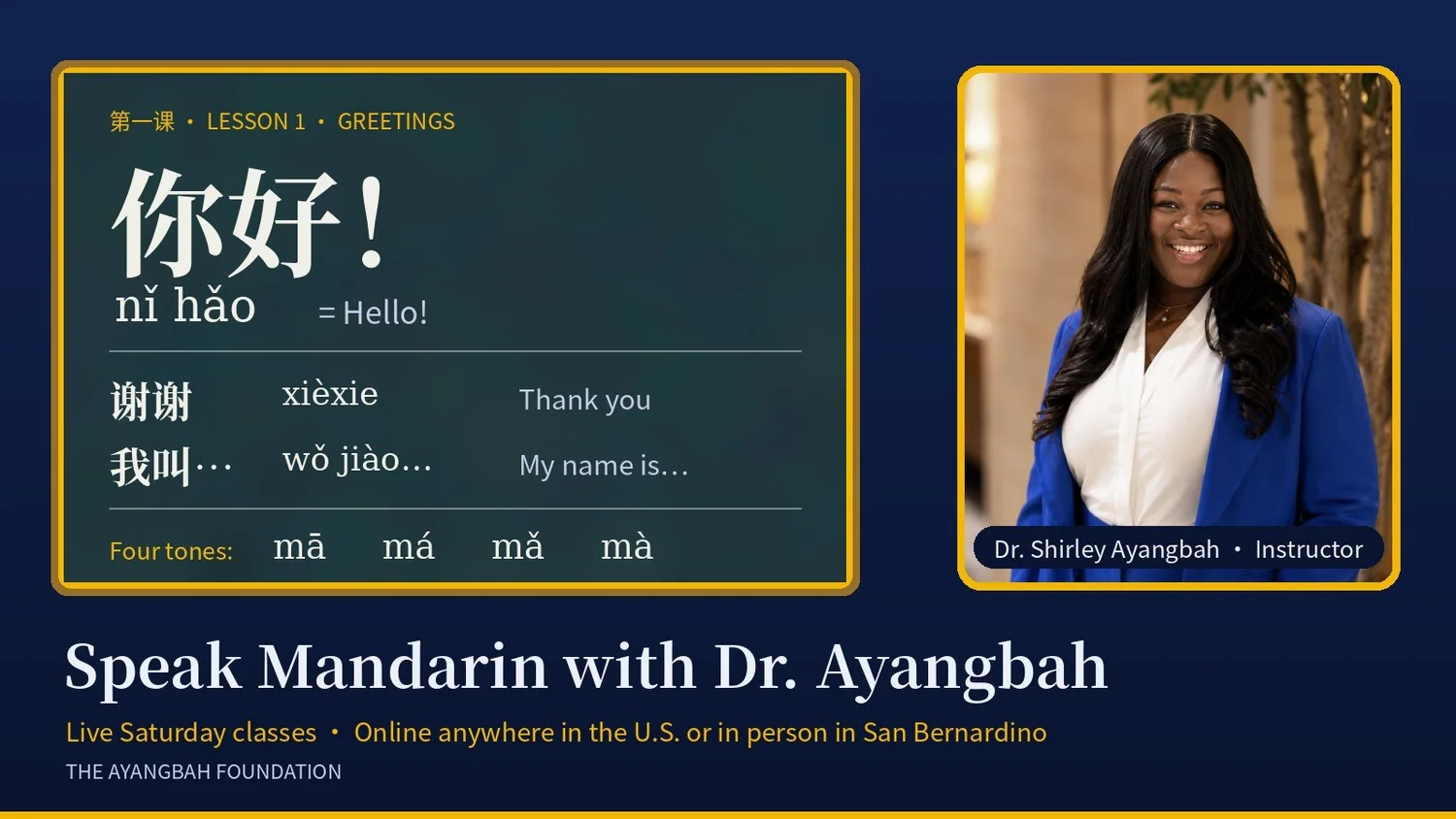
If you grew up hearing Mandarin at home but answer your family in English, you are a heritage learner, and you already have a head start. The fastest way forward is to turn what you understand into what you can say: rebuild your pronunciation with pinyin and tones, then practice speaking in a low-pressure setting. Our Conversational Mandarin Chinese, Level 1 class is speaking-first and taught in English, which makes it a comfortable place to do that.
The heritage learner's mixed bag
Heritage learners often have strengths and gaps that do not match a typical beginner:
- Strengths: a good ear for the sound of Mandarin, family words you know by heart, and understanding more than you realize.
- Gaps: trouble finding words when you speak, uncertainty about tones, and little or no reading or writing.
Many heritage learners also carry some embarrassment: "I should know this already." Let that go. Plenty of people grow up between two languages. Starting a class is a sign of care, not failure.
Why a beginner class can still help you
You might wonder if Level 1 is too basic. For many heritage learners, it fills exactly the right gaps. Learning pinyin gives you a way to look up and write down the words you hear at home. Studying the four tones explains why your parents sometimes correct you. And speaking in role-play builds the habit of answering in Mandarin instead of English.
Family words worth reviewing
- Māma / Bàba: Mom / Dad
- Nǎinai / Yéye: Grandma / Grandpa (father's side)
- Lǎolao / Lǎoye: Grandma / Grandpa (mother's side, common in northern usage; wàipó and wàigōng are also widely used)
- Gēge / Jiějie: Older brother / Older sister
- Dìdi / Mèimei: Younger brother / Younger sister
Families vary, so ask your relatives which words they use. That question alone is a great conversation starter.
Simple ways to speak more at home
- Start with routines. Say good morning, thank you and goodbye in Mandarin every day.
- Ask small questions. "Nǐ chī fàn le ma?" (Have you eaten?) is a classic, caring greeting in many Chinese families.
- Tell your family your goal. Ask them to answer you in Mandarin and to be patient.
- Use video calls. Short calls with grandparents give you real, meaningful practice.
- Write new words in pinyin. Keep a small notebook of words you hear at home.
A note on dialects
Some families speak Cantonese, Taiwanese Hokkien or another Chinese language at home, not Mandarin. Our class teaches standard Mandarin. If your family speaks another variety, Mandarin can still be very useful, but it is worth knowing the difference before you enroll. If you are not sure, call or text us and we will talk it through.
Class details
- Class: Conversational Mandarin Chinese, Level 1, taught in English by The Ayangbah Foundation
- Dates: Saturdays, October 17 to December 12, 2026 (no class November 28). 8 weeks, 16 hours total.
- Live online: 9:00-11:00 AM Pacific (12:00-2:00 PM Eastern), from anywhere in the U.S.
- In person: 11:30 AM-1:30 PM at 255 N. D Street, Suite #200-XXVII, San Bernardino, CA 92401
- Tuition: $297
- What you get: speaking-first lessons covering pinyin, the four tones, greetings, numbers, time, shopping and directions, with role-play in every class. The textbook is Developing Chinese: Elementary Comprehensive Course 1 (2nd Edition), which you buy separately.
Required textbook
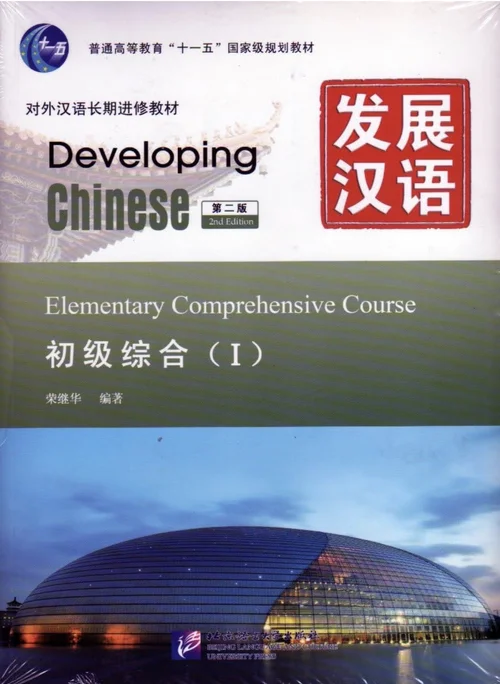
Speak Mandarin with Dr. Ayangbah uses Developing Chinese: Elementary Comprehensive Course 1 (2nd Edition, with MP3 audio), 发展汉语 初级综合 (I), by Rong Jihua (Beijing Language and Culture University Press). Get the 2nd Edition of Elementary Comprehensive Course 1 and have it by the first class. Buy it on Amazon.
How to enroll
- Apply online. It takes about 2 minutes.
- Pay $297 through the Mandarin class pay link or on our tuition page.
- We confirm your seat within 2 business days.
Want to ask questions first? Join our free info session and orientation, online every Monday from 5:00 to 5:45 PM Pacific. Register on the enroll page to get the link.
FAQ
I understand Mandarin but can't speak it. Is Level 1 right for me?
Often, yes. Level 1 builds pinyin, tones and speaking confidence through role-play, which is usually what heritage learners need most. Come to a free Monday info session if you want to talk it over.
Is the class taught in Mandarin?
Explanations are in English, and you practice speaking Mandarin throughout. That makes it comfortable for learners at different levels.
My family speaks Cantonese. Will this class help?
This class teaches Mandarin, which is a different spoken language from Cantonese. It can still be valuable, but it will not teach Cantonese.
Questions? Call or text (909) 454-7076, or email info@ayangbahfoundation.org.