
Mandarin is challenging for English speakers, mainly because of tones and the writing system, but parts of it are simpler than most people expect, like basic grammar. If your goal is to speak and understand everyday Mandarin, a speaking-first approach makes it very doable. That is how our Conversational Mandarin Chinese, Level 1 class is designed, live online or in person in San Bernardino.

What is genuinely hard
Let us be honest about the tough parts so they do not surprise you.
- Tones. Mandarin uses pitch to tell words apart. English uses pitch for emotion, not meaning, so your ear needs training.
- New sounds. A few Mandarin sounds, like those written with zh, ch, x and q in pinyin, do not match English exactly.
- Characters. Written Chinese uses characters instead of an alphabet. Reading and writing take time.
- Few shared words. Unlike many European languages, Mandarin shares very little vocabulary with English, so you cannot guess as often.
What is easier than you think
Here is the part people rarely hear.
- No verb conjugation. Verbs do not change for I, you, he or she. "I go," "you go" and "she goes" all use the same verb.
- No gendered nouns. You do not memorize whether a table is masculine or feminine.
- Simple time markers. Instead of irregular past tense forms, Mandarin often uses time words and small particles.
- Pinyin. Because pinyin uses the Roman alphabet, you can start speaking long before you learn characters.
Why "hard" depends on your goal
If your goal is to read a Chinese newspaper, expect a long road. If your goal is to greet a customer, chat with a relative, order food on a trip, or handle simple shopping and directions, you can make real progress in weeks, not years.
That is why our Level 1 class focuses on speaking. You learn pinyin, the four tones, greetings, numbers, time, shopping and directions, then practice them in role-play every single class.
How to make Mandarin easier on yourself
- Get feedback early. Bad tone habits are easier to fix in week one than in month six. A live teacher catches them.
- Say everything out loud. Reading silently does not train your mouth or your ear.
- Learn phrases, not lists. "How much is this?" is more useful than 50 isolated nouns.
- Practice a little, often. Fifteen minutes on most days beats two hours once a week.
- Keep it social. Classmates and role-play make practice feel normal instead of awkward.
The bottom line
Mandarin asks for patience, especially with tones. It also rewards you quickly once you start speaking. If you have been putting it off because it seems impossible, a structured, beginner-friendly class taught in English is the most comfortable way to find out what you can do in 8 weeks.
Class details
- Class: Conversational Mandarin Chinese, Level 1, taught in English by The Ayangbah Foundation
- Dates: Saturdays, October 17 to December 12, 2026 (no class November 28). 8 weeks, 16 hours total.
- Live online: 9:00-11:00 AM Pacific (12:00-2:00 PM Eastern), from anywhere in the U.S.
- In person: 11:30 AM-1:30 PM at 255 N. D Street, Suite #200-XXVII, San Bernardino, CA 92401
- Tuition: $297
- What you get: speaking-first lessons covering pinyin, the four tones, greetings, numbers, time, shopping and directions, with role-play in every class. The textbook is Developing Chinese: Elementary Comprehensive Course 1 (2nd Edition), which you buy separately.
Required textbook
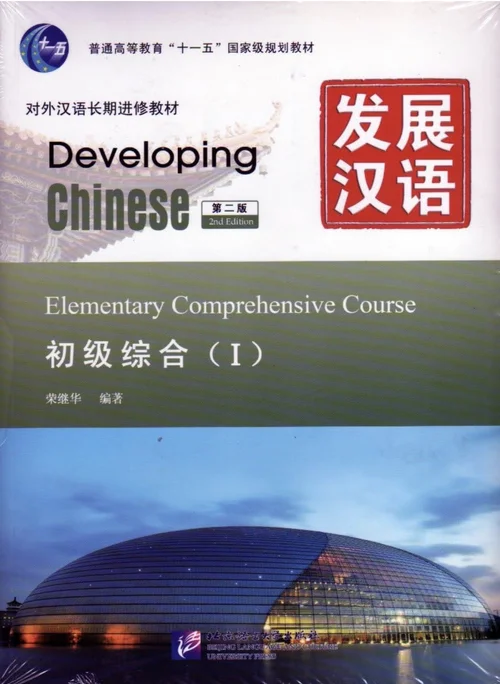
Speak Mandarin with Dr. Ayangbah uses Developing Chinese: Elementary Comprehensive Course 1 (2nd Edition, with MP3 audio), 发展汉语 初级综合 (I), by Rong Jihua (Beijing Language and Culture University Press). Get the 2nd Edition of Elementary Comprehensive Course 1 and have it by the first class. Buy it on Amazon.
How to enroll
- Apply online. It takes about 2 minutes.
- Pay $297 through the Mandarin class pay link or on our tuition page.
- We confirm your seat within 2 business days.
Want to ask questions first? Join our free info session and orientation, online every Monday from 5:00 to 5:45 PM Pacific. Register on the enroll page to get the link.
FAQ
Is Mandarin harder than European languages for English speakers?
For most English speakers, yes, mainly because of tones, new sounds and characters. Mandarin grammar, though, is simpler in some ways, with no verb conjugation or gendered nouns.
How long before I can have a basic conversation?
It depends on your practice, but a speaking-first class gives you greetings, numbers, time, shopping and directions to use right away in role-play.
Is the class taught in Mandarin only?
No. Instructions and explanations are in English, and you practice speaking Mandarin throughout every class.
Questions? Call or text (909) 454-7076, or email info@ayangbahfoundation.org.